

Blender 5.2 has arrived. This is a Long Term Support (LTS) release with two years of updates, making it ideal for projects that require long-term stability.
The release introduces improvements across many areas of the application. Geometry Nodes is one of the main areas of focus, with several new nodes extending its toolset. Highlights include the experimental XPBD Solver node for node-based physics, designed for hair and cloth simulations. The release also introduces the Sample Sound Frequencies node for creating audio-reactive animations and simulations, while the new Mesh Bevel node brings beveling operations directly into Geometry Nodes.
Rendering also receives several updates. Cycles gains an optional texture caching feature that improves performance and memory efficiency, while EEVEE addresses long-standing usability issues related to the transition to the EEVEE Next project architecture. Both renderers also support the new Thin Wall mode in the Principled BSDF node, enabling the accurate rendering of thin materials such as paper, leaves, and window sheets.

The compositor also receives six new socket types and 35 new nodes. It also gains support for auto keying (automatic creation of keyframes) in gizmos, alongside new utility node groups and compositing assets that provide quick starting points for a variety of looks.
Animation, modeling, and sculpting also receive a range of updates. Animation introduces several new Playback Loop modes for greater control over timeline playback. In modeling, operators previously available through the popular Loop Tools add-on are now included natively while also benefiting from improved performance.
Sculpting gains the new Add Primitive tool for inserting primitive meshes directly in Sculpt Mode, alongside the Scene Project brush for wrapping surfaces onto nearby geometry. The voxel remesher has also been improved, providing better preservation of vertex-painted meshes after repeated remeshing.
Grease Pencil sees the addition of a Delaunay fill algorithm that creates geometry from boundary strokes. The distribution of shapes along a stroke can now also be controlled through Placement settings.
The release is rounded out with updates to the Video Sequencer, virtual reality, and the user interface. The Video Sequencer now supports sharing compositor effects as modifier assets. It also adds title styling, independent modifier toggles for preview and render, and color grading with HDR scopes.
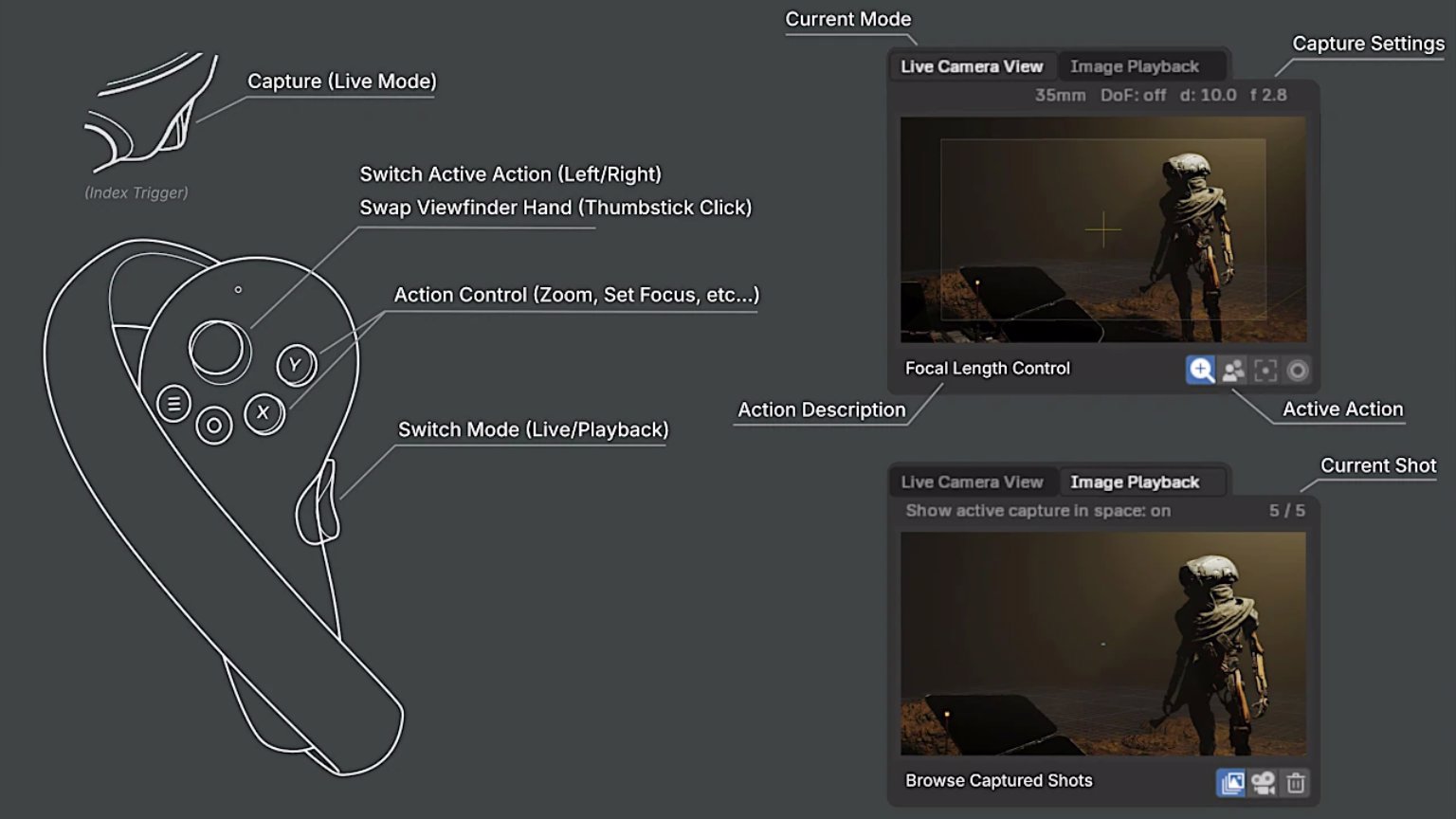
Virtual Reality introduces Location Scouting, enabling users to block out camera viewpoints while providing access to camera properties. The deadzone threshold for the default VR controller bindings has also been adjusted to provide a smoother user experience.
The user interface also includes an extensive range of smaller improvements, such as an operator for swapping the X and Y render resolutions, a Scroll to Active feature in the Outliner that keeps the active object in view, and a compact sidebar mode.
This is just a summary of what is new in this release. For the complete list of changes, be sure to check the official release notes.